Carpet gets blamed during pollen season in Indian Trail, sometimes fairly and sometimes not. A carpet does trap pollen, dust, and dander that would otherwise stay airborne, and that trapping can help a room, right up until the carpet is full. A loaded carpet stops filtering and starts releasing particles back into the air with every footstep.
Spring in the Piedmont makes the question practical rather than theoretical. Pine and oak pollen coat every car and porch in yellow for weeks, shoes bring it inside, and open windows on the first mild days let in far more. Working through your carpet like an inspection, in order, tells you whether it is helping or adding to the problem.
How carpet behaves as a filter
Fibers catch particles that settle out of the air, holding them below the surface where room air currents cannot easily lift them again. Studies of indoor air generally find that a clean carpet keeps settled allergens out of circulation better than they stay out on a hard floor, where every step and draft stirs them back up. That advantage only holds while there is room in the pile and while vacuuming actually removes what has collected.
The failure mode is slow. Weeks of pollen season load the fibers. A vacuum with a clogged filter or a worn brush roll skims the top and leaves the load in place. Humidity, which arrives with Carolina spring rain, makes fine particles cling harder. By late spring the carpet can hold a season's worth of pollen in the main traffic paths, exactly where feet disturb it most.
The spring carpet check, in order
- Shoe-line test: Look at the carpet just inside the main entry. A visible gray-yellow cast that vacuuming does not lift means the entry zone is loaded and needs extraction, not another pass.
- Vacuum performance: Empty the bin or change the bag and clean or replace the filter before judging the carpet. Fail sign: suction feels weak and the brush roll leaves lines of debris behind it.
- Traffic-lane color: Compare the hall and the path to the kitchen against carpet under furniture. A clear difference after vacuuming means soil and pollen are packed below the surface.
- Dark sock test: Walk the main rooms in clean white socks for an evening. Gray soles by bedtime point to residue sitting in the pile that regular vacuuming is not removing.
- Odor on humid days: A stale, dusty smell that appears when humidity rises suggests a loaded pad and fiber base. Surface fresheners mask it without changing it.
- Last extraction date: If the carpet has not been hot-water extracted in over a year, and it carried a full pollen season in that time, schedule it. Fail sign: nobody in the house can remember when it was last done.
- Bedroom check: Bedrooms matter most because you breathe that air for hours at a stretch. A loaded bedroom carpet that fails the sock test should move to the front of the line.
What actually reduces the load
Vacuuming frequency beats vacuuming intensity during pollen season. Slow passes twice a week in the main rooms remove particles before they get packed down, and a vacuum with a sealed HEPA filtration system keeps the fine fraction from blowing straight back into the room. Shoes off at the door cuts the single largest source, since pollen arrives on soles far more than it drifts in on air.
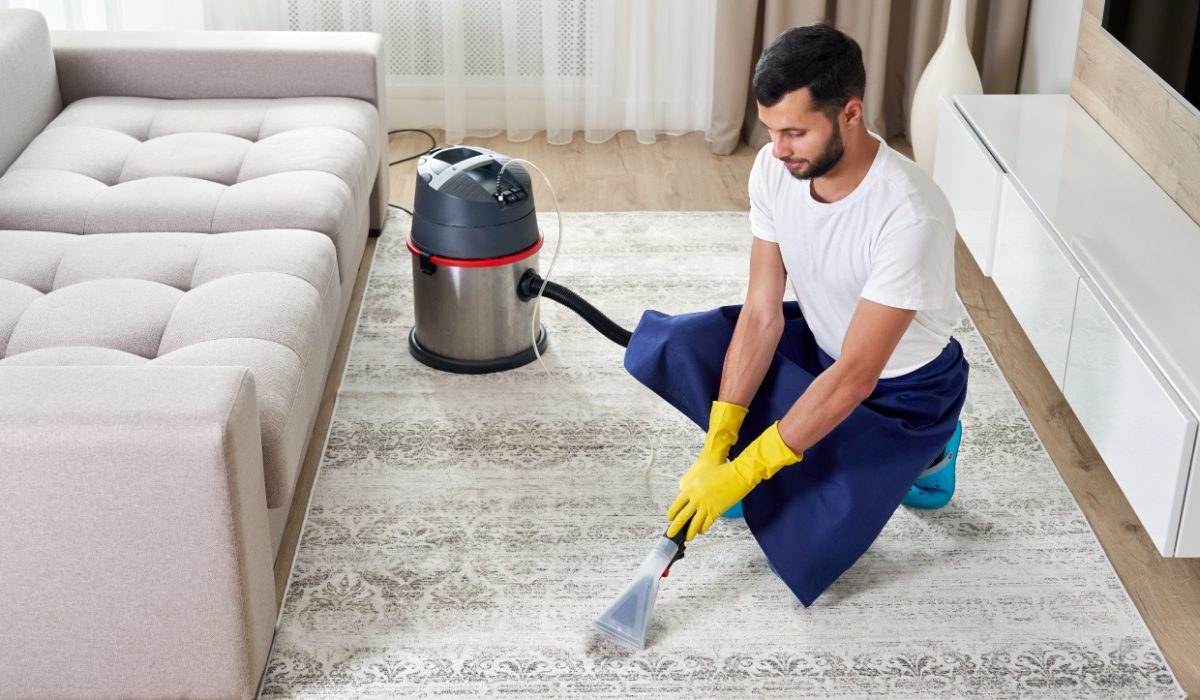
Extraction is the reset. Hot-water extraction flushes the pile in a way dry vacuuming cannot, pulling out the packed pollen and dust that have worked below the surface. Timing it for late spring, after the heaviest pollen drop has passed, gives the cleanest result for the longest stretch. Doing it in the middle of peak pollen still helps a loaded carpet, it just reloads faster.
Keeping the filter working between cleanings
Treat the entry as a checkpoint: a stiff outdoor mat, a washable indoor mat, and a place to leave shoes will cut what reaches the carpet across a whole season. Change the HVAC filter on its spring schedule too, since the system and the carpet are handling the same air. For households using services such as those at ABC Carpet Care, a standing spring extraction for bedrooms and main living areas is the simplest pattern to keep.
Common questions
Would removing carpet fix our allergy problem?
Not automatically. Hard floors release settled particles back into the air more easily, so the gain depends on cleaning habits as much as flooring type.
How often should carpet be vacuumed during pollen season?
Twice a week in main rooms is a solid baseline, with slow overlapping passes. Entry areas benefit from a quick extra pass after heavy pollen days.
Does steam cleaning kill dust mites?
The heat of a professional hot-water extraction does kill dust mites in the cleaned area. The lasting benefit comes from removing the dust and dander they feed on.
Photos in this guide are representative stock images.
← All guides from ABC Carpet Care← Back to ABC Carpet Care