After a professional cleaning in Indian Trail, the carpet looks even, the traffic lanes are lighter, and then someone asks whether to add protector. It is a fair question, because protector is invisible. You cannot see it working the day it goes on, and you cannot see the day it wears off.
Protector, usually a fluoropolymer coating applied after cleaning, does one narrow job well. It gives you time. A spill sits on the fiber longer instead of soaking straight in, and dry soil releases more easily at the next vacuuming. That window is the whole value, and for some houses in Indian Trail it matters more than for others.
What protector actually does
Clean carpet fiber is absorbent. That is why a dropped drink spreads fast and why gritty soil works its way down where a vacuum cannot reach it. A fluoropolymer treatment coats each fiber with a thin, clear layer that resists wetting. Liquids bead for a short while rather than wicking in immediately, and tracked-in dirt stays closer to the surface.
It also helps with the slow damage most people miss. In a Piedmont summer, fine red clay dust and pollen get ground in by foot traffic. Each step presses abrasive particles against bare fiber. A coated fiber sheds more of that load during routine vacuuming, so the pile stays upright longer and the dull, gray cast in hallways develops more slowly.

What protector does not do
Protector is not a seal, and it is not a guarantee against stains. A spill left overnight will still soak through. Pet urine, which arrives warm and acidic and often in volume, will still reach the backing if it sits. Strong dyes, bleach spots, and heat damage are outside what any coating can prevent. Anyone who describes it as making carpet stain-proof is overselling a useful product.
It also does not replace cleaning. Soil still accumulates, allergens still settle, and extraction still needs to happen on a normal schedule. Think of protector as slowing the clock between cleanings, not stopping it. Skipping a needed cleaning because the carpet was treated a year ago is how a treated carpet ends up looking worse than an untreated one that was cleaned on time.
Where the cost of waiting shows up
The neglect side of this choice is not dramatic. Nobody loses a carpet in a month because they skipped protector. The cost builds quietly. Spills that would have blotted up cleanly in the first year start leaving a shadow after the factory treatment wears off, usually a few years into the carpet's life. Traffic lanes that vacuumed back bright stay dull. Each cleaning then has to work harder to recover appearance, and some of that shading becomes permanent fiber wear rather than removable soil.
By the time the difference is obvious from the doorway, reapplying protector cannot undo it. Protector protects the fiber you still have. It cannot restore pile that has been cut by grit or color that has been altered by an old spill. That is the real argument for deciding early, right after a cleaning while the fiber is clean, instead of after the lanes have already turned.
Who gets the most out of it in Indian Trail
Houses with kids eating in carpeted rooms, dogs coming in from a clay yard, or a main hallway that carries every trip between the garage and the kitchen get the clearest return. Light-colored carpet shows the benefit sooner because every spill is visible. Rental turnovers and homes about to be listed also benefit, since the goal there is keeping a fresh cleaning looking fresh through showings and move-in.
A low-traffic guest room in an adults-only house is a weaker case. If a room is vacuumed weekly, rarely eaten in, and cleaned on schedule, protector adds a margin you may never need to use. A practical split is common: treat the living room, stairs, and hall, and skip the spare bedroom. Services such as those listed by ABC Carpet Care, including carpet protectant and upholstery cleaning, are easiest to judge room by room rather than as an all-or-nothing add-on.
Common questions
Does protector change how the carpet feels?
No, not once it has cured. A correctly applied treatment is not sticky or stiff, and the pile should feel the same as it did right after cleaning.
Can protector be applied without a full cleaning first?
It should not be. Coating soil into the fiber locks in the problem, so protector belongs on freshly extracted carpet where it can bond to clean fiber.
How do I know when it has worn off?
Watch how a small spill behaves. When liquids stop beading briefly and soak straight in, and when traffic lanes stop vacuuming back bright, the treatment is largely gone.
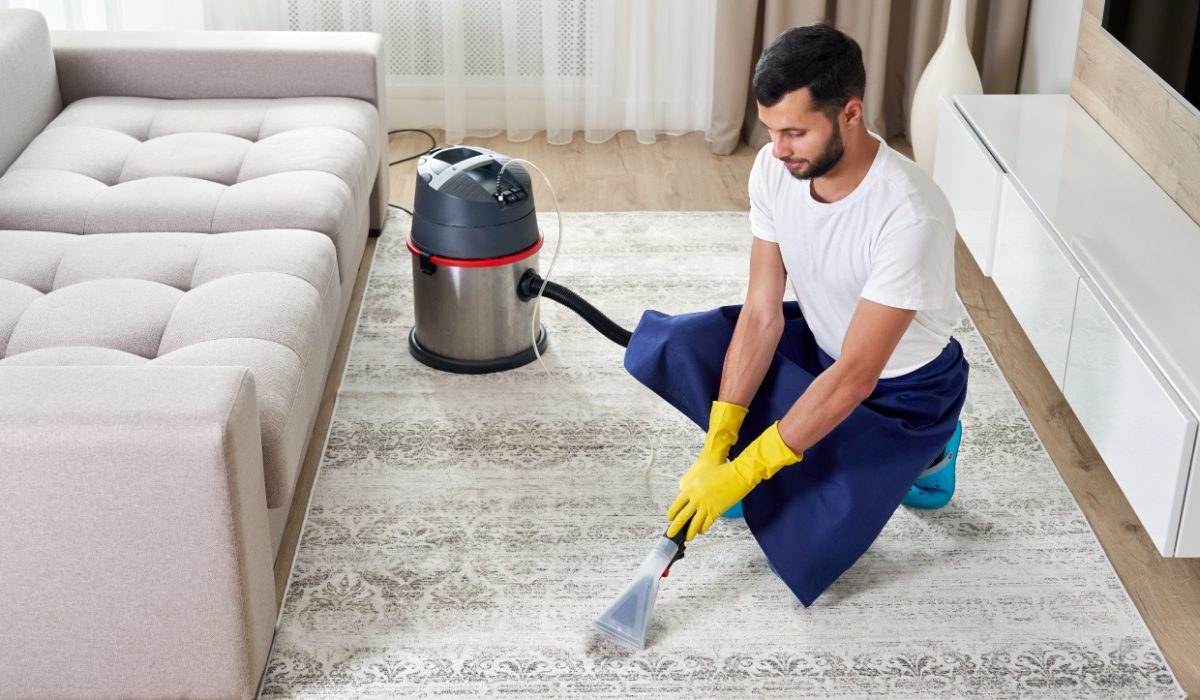
Photos in this guide are representative stock images.
← All guides from ABC Carpet Care← Back to ABC Carpet Care