A pet accident on carpet is a timing problem before it is a cleaning problem. In the first minutes, the liquid is mostly on the surface and can be lifted out almost completely. An hour later it has spread through the backing. By the next day, in a warm Indian Trail house, it has reached the pad, begun to feed odor-causing bacteria, and started a stain that no surface treatment fully reaches.
That does not mean every accident needs the same response. A small, fresh spot on a treated carpet and a repeat spot a dog has used for a week are different problems, and the table below sorts the main options by the situation you actually have.
Why minutes matter more than products
Urine leaves the body warm and mildly acidic, and it soaks downward and outward at once. The visible spot is usually the smallest part of it; under the backing, the wetted area in the pad can be two or three times as wide. As it dries, salts concentrate, the chemistry shifts alkaline, and those salts can permanently alter carpet dyes. Dried urine also becomes food for bacteria, which is where the sharp ammonia odor comes from, and why an old spot can smell worse on a humid day months later.
Scrubbing makes all of this worse. A scrubbing motion frays fiber tips, drives liquid deeper, and spreads the wetted area wider in the pad. Blotting with weight, pressing straight down through folded towels, pulls liquid back up instead. Heat is the other early mistake: a steam cleaner or hot water on a fresh protein-based stain can set color and odor into the fiber, so cool treatment first is the safe order.
| Situation | Best first response | What it handles | Where it falls short |
|---|---|---|---|
| Fresh accident, found within minutes | Blot with weight, cool water rinse, blot again | Removes most liquid before it reaches the pad | Little help once the spot has dried |
| Fresh accident, larger volume | Blot heavily, then enzyme treatment left to dwell | Enzymes break down the organic material that causes odor | Needs dwell time and cannot reach a fully saturated pad |
| Dried spot, odor when you get close | Enzyme treatment plus thorough extraction | Works on residue in the pile and upper backing | Pad-level contamination often survives surface work |
| Repeat spot, used over days or weeks | Professional treatment, possibly pad inspection | Reaches the reservoir below and treats a wider area | Severely saturated pad sections may need replacing |
| Old spot, odor across the room on humid days | Professional deep treatment and pad work | Addresses the full depth of the problem at once | Dye damage from old alkaline salts may be permanent |
The home response, in the right order
Get solids up first, then blot. Stand on folded towels over the spot, replace them as they soak through, and keep going until a fresh towel comes up only slightly damp. Rinse by blotting with a towel dampened in cool water, never by pouring water on, since added volume spreads the problem in the pad. Then apply an enzyme cleaner if you are using one, cover it to keep it damp, and give it the dwell time on the label. Enzymes are living chemistry; they need time and moisture, and a quick spray-and-vacuum gives them neither.
Skip the home remedies that complicate later cleaning. Vinegar can help neutralize a very fresh spot but can also set some dyes, and heavy perfumed powders mostly add residue that a later extraction has to remove. Baking soda on a still-wet spot forms a paste in the pile that is harder to get out than the original problem.
When the clock has already run out
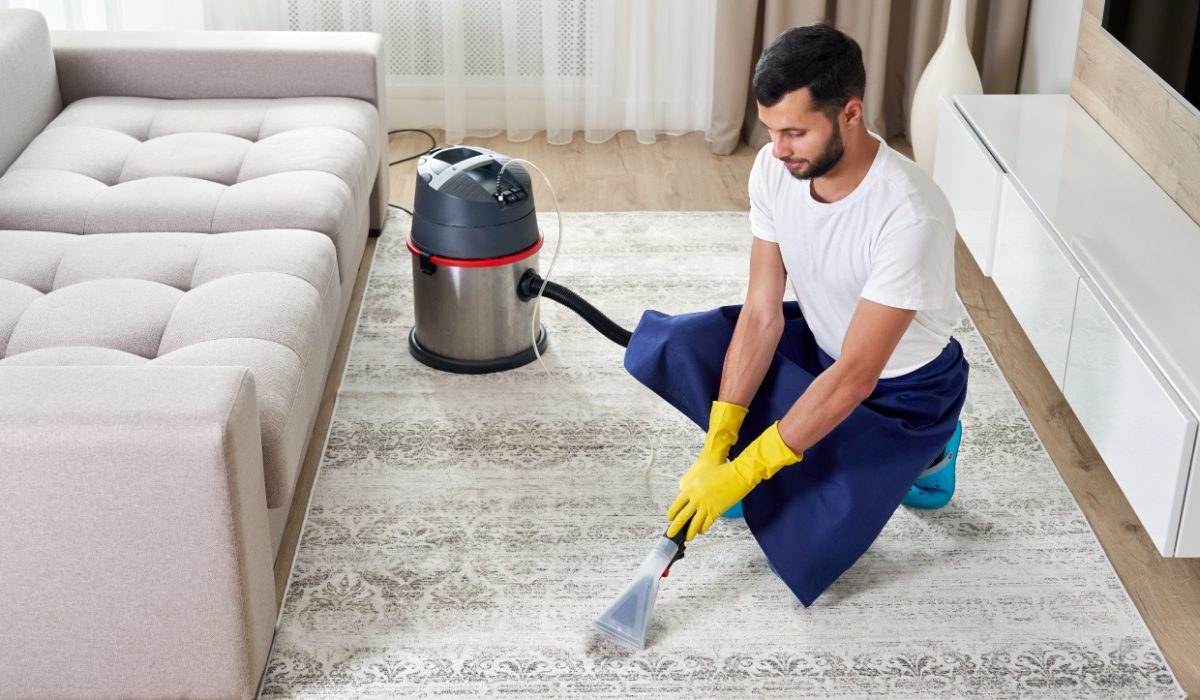
Some signs say the problem is below your reach: odor that returns a day or two after the spot looks clean, a pet returning to the same place because the scent marker survives in the pad, or a spot that smells stronger every humid afternoon. At that point the useful question is depth, not product. Pet stain and odor treatment and water extraction are among the services listed by ABC Carpet Care, and a depth-first treatment, including pad work where needed, is what separates a fixed spot from a recurring one.
Common questions
Why does my dog keep using the same spot?
Residual scent in the pad marks the place even when the surface smells clean to you. Removing the scent at pad depth is what usually breaks the habit.
Can I use a home steam cleaner on a fresh accident?
Avoid heat on a fresh pet stain, since it can set protein-based color and odor into the fiber. Cool blotting and enzyme treatment come first.
How long does an enzyme cleaner need to work?
Follow the label, but most need several hours of damp dwell time to break down the material. Covering the spot with a damp towel helps it stay active.
Photos in this guide are representative stock images.
← All guides from ABC Carpet Care← Back to ABC Carpet Care